


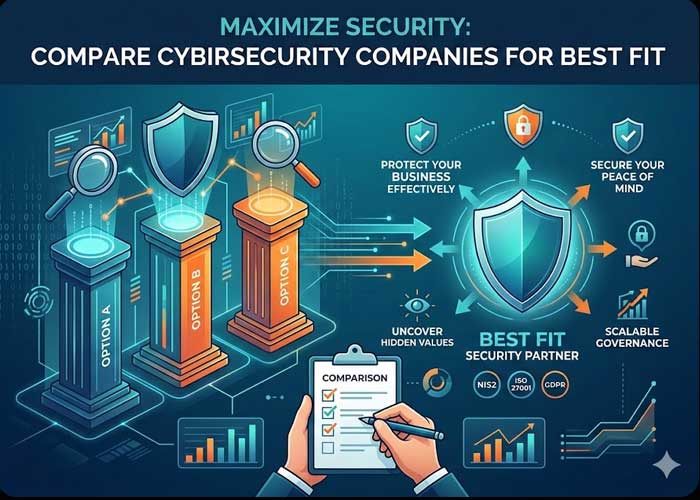
You wouldn’t buy the first car you see on the lot, especially without asking if it’s a gas-guzzling truck when all you need is a small sedan. Yet, when faced with a complex decision like cybersecurity, many business owners do exactly that. That first quote might seem professional, but it’s often a generic template designed to fit everyone—which, in practice, means it fits no one perfectly. Accepting it without asking questions is one of the most common and costly ways of avoiding common cybersecurity vendor mistakes.
This one-size-fits-all approach can be surprisingly dangerous. Consider a five-person accounting firm receiving a proposal packed with services for a 100-person tech company, while completely missing the advanced email protection it desperately needs to fight tax-season scams. Without comparing, a business can easily end up paying for features it will never use while leaving its biggest vulnerabilities exposed. True protection is found in the details of cybersecurity company service level agreements, which outline exactly what is—and is not—covered.
Shopping around forces a potential partner to move beyond their standard sales pitch and listen to your specific needs. It’s a process that makes them prove their value by tailoring a solution to your actual business, not just their brochure. This empowers you to find a provider who can demonstrate strong security provider compliance and protect what matters most. Ultimately, comparing isn’t about haggling for a lower price; it’s about gaining the confidence that you have the right protection for the right reasons.
Are You Buying a Sedan or a Semi-Truck? Matching Services to Your Business Size
When you shop for a vehicle, your choice is guided by your needs. You wouldn’t buy a semi-truck for a daily commute or a small sedan to haul commercial cargo. The same simple logic applies when finding a cybersecurity firm for your small business. Many providers are built to protect giant corporations, offering complex and expensive solutions that are total overkill for a company with a handful of employees. The key is matching the scale of the protection to the scale of your business.
Consider the difference between a freelance consultant working from one laptop and a 20-person office with a shared network. The consultant might need to secure their device and ensure their data is backed up. The office, however, also has to worry about how employees access information and the security of the connections between all their computers. An effective partner will immediately recognize these distinct needs and won’t try to sell you a one-size-fits-all package.
Beyond just the number of employees, different industries play by different rules. A doctor’s office, for instance, must follow strict legal requirements for protecting patient privacy that a local bakery doesn’t face. A cybersecurity provider that specializes in healthcare will already know these rules, preventing costly mistakes. This industry-specific expertise is a crucial factor in how to evaluate cybersecurity providers and find a true partner.
So, how can you quickly tell if a company is the right size for you? During your first conversation, ask them one simple question: “Can you describe your typical client?” If they talk about 500-employee companies and you have a team of five, they’re probably not a good fit. You are looking for a provider who sees your business not as a tiny account, but as their core focus.
Product vs. Partner: What Happens After an Alarm Goes Off?
Imagine your home’s smoke detector goes off. It does its job perfectly by alerting you to a problem, but it can’t put out the fire. Now, contrast that with a monitored alarm system that automatically calls the fire department. One is a product that identifies a threat; the other is a service that provides an expert response. This is the single most important difference to understand when comparing cybersecurity companies.
Some solutions are just products—software you install that sends you an alert when it spots trouble. The problem? It’s still on you, the busy business owner, to figure out what the alert means and how to fix it. A true security partner, on the other hand, offers a managed service. They don’t just sell you the alarm; they monitor it for you 24/7. When a threat is detected, their team of experts immediately steps in to resolve it.
Here’s the bottom line difference:
Security Product vs. Security Partner
| Feature | A Security Product (The DIY Approach) | A Security Partner (The Managed Service) |
| Setup & Maintenance | You install and manage it. | They install and manage it for you. |
| Alert Monitoring | You receive the security alert. | Their expert team receives the alert. |
| Incident Response | You are responsible for fixing the issue. | They are responsible for fixing the issue. |
Decoding the Dotted Line: How to Find the True Cost of Cybersecurity
That full-service partner approach sounds more expensive, and it often is—on paper. But a monthly fee is like a car’s sticker price; it rarely tells the whole story. Some providers add significant setup fees or charge extra for onboarding. When figuring out how much cybersecurity services should cost, always ask for the total first-year price, not just the recurring payment. This simple question uncovers hidden expenses and shows you the true financial commitment before you sign on the dotted line.
Beyond the initial setup, the real difference in value often lies in the support you get. Imagine a security emergency on a holiday weekend. Is an expert available to help immediately, or are you stuck leaving a voicemail? This is where you need to understand the company’s service guarantees, often called cybersecurity company service level agreements. A cheaper plan might only include 9-to-5 support, with emergency help costing a fortune per hour. Clarifying when you can get an expert on the phone is just as important as the technology itself.
Putting this all together is the core of a simple cybersecurity vendor risk assessment process. By asking about the total first-year cost and the details of their 24/7 support, you can compare offers on a level playing field. You may find a slightly more expensive plan that includes round-the-clock experts is actually the better financial deal. Once you have a clear picture of the costs, the final step is making sure the company has the reputation to back up its promises.
Reading Between the Lines: How to Vet a Company’s Reputation and Results
A slick website and a confident salesperson can make any company look like an expert. But when it comes to protecting your business, you need proof, not just promises. This is where you look beyond marketing claims and dig into a company’s track record. While online security company reviews offer a starting point, the most valuable insights often come from understanding cybersecurity company case studies. These stories of past work are supposed to show how a company solved real problems for real clients, but you have to learn how to read between the lines.
The most important filter to apply is industry experience. Think about it: a doctor’s office has different security needs than a construction company. The doctor worries about protecting patient health records, while the construction firm is concerned with securing financial bids. A cybersecurity provider that has already worked with businesses in your field knows your specific challenges and the rules you have to follow. They aren’t learning the job on your time; they’re applying proven expertise, which is a key part of any cybersecurity vendor risk assessment process.
With that in mind, ask potential vendors for a case study from a business similar to yours. Don’t just look for glowing quotes. Instead, search for specifics. Did they solve a problem you’re worried about, like preventing fake email scams or securing customer payment information? A good case study details the “before” and “after,” showing a clear result. If a company can’t provide a relevant example of their success, it’s a major red flag. Asking for this proof is one of the most powerful questions you can ask, and it’s just one of several you should have ready.
Your 7-Question Cheat Sheet for Vetting Any Cybersecurity Company
Walking into a conversation with a potential security provider can feel like you’re at a disadvantage. They know the technology, and you just want to know if they can protect your business. To level the playing field and make sure you get the answers you actually need, use this simple cybersecurity service comparison checklist. These seven questions to ask potential security vendors are designed to cut through the jargon and get to the heart of what matters: fit, support, and value.
Treat this like an interview. After all, you’re hiring a partner to protect one of your most critical assets. Asking each company the same questions is the easiest way to how to evaluate cybersecurity providers on a level playing field.
- Can you describe your ideal customer? Is that a business like mine?
- What happens if we have a security emergency after business hours? Who do I call, and what’s the process?
- Beyond the monthly fee, what other costs should I expect in the first year (like setup or training)?
- How will you help train my employees to be safer online?
- What kind of reports will I receive to show me that the service is working?
- Can you provide a case study or reference from a company similar to ours?
- What makes your service a better fit for my business than just buying antivirus software?
By getting clear, straightforward answers to these questions, you create a simple, side-by-side comparison that makes your decision much clearer. It’s a powerful step toward choosing a partner with confidence.
From Overwhelmed to Empowered: Choosing Your Cybersecurity Partner with Confidence
Before reading this, “cybersecurity” was likely an intimidating and vague task on your to-do list. Now, you have a clear map. You understand that the goal isn’t to become a security expert overnight but to learn how to ask the right questions, turning confusion into a confident plan of action.
This process is less about buying software and more about choosing the right cybersecurity partner. Just as you’d vet an accountant to handle your finances, you are now equipped to find a security professional who understands your business and is committed to protecting it for the long term. You know what to look for in a cybersecurity company beyond just a price tag.
Ultimately, making a careful comparison isn’t about gigabytes or firewalls; it’s about securing your peace of mind. The right partner protects your finances, your customers’ trust, and your hard-earned reputation, freeing you to focus on what you do best—running your business.
So take the first step. Use the questions you’ve learned to call two or three providers and simply start the conversation. You don’t need to be an expert to make an expert choice for your small business. You’re ready.

